Identifying Authentic Black Obsidian Through Visual and Tactile Clues
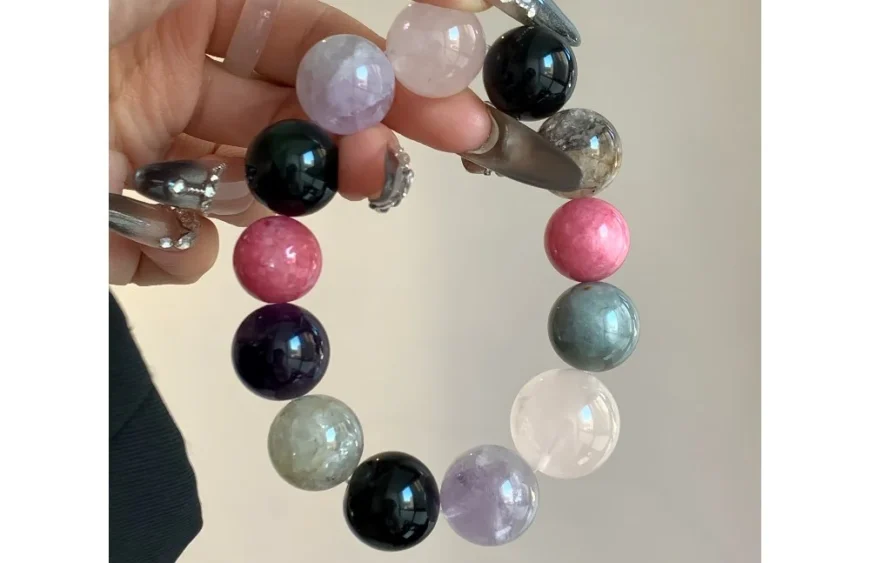
Authentic black obsidian forms naturally from rapidly cooled volcanic lava, resulting in a dense, glass-like structure. To distinguish genuine stones from imitations like colored glass, start by examining their appearance under natural light. True black obsidian has a deep, uniform black color with a subtle sheen, while fakes may appear overly shiny or have uneven color patches. Next, test the texture by running your fingers along the surface. Genuine stones feel cool and smooth, with no rough edges or air bubbles visible to the naked eye. If the bracelet’s beads have a plastic-like texture or visible imperfections, they’re likely counterfeit.
Assessing Color Intensity and Optical Effects for Quality Variations
Black obsidian’s value is often tied to its color depth and unique optical phenomena. The most sought-after varieties include:
- Rainbow Obsidian: When exposed to strong light, this type displays iridescent bands of purple, green, or blue, caused by microscopic mineral inclusions. For the best effect, rotate the bracelet under sunlight or a flashlight—authentic rainbow obsidian will show vivid, shifting colors, while fakes may appear dull or only reflect light in one direction.
- Golden Sheen Obsidian: This variety contains tiny golden or silver particles that create a shimmering effect when moved. High-quality golden sheen obsidian has a consistent, sparkling appearance across all beads, whereas lower-grade stones may have patchy or faint sheen.
- Snowflake Obsidian: by white or gray “snowflake” patterns, this type is valued for its contrast between dark and light areas. Genuine snowflake obsidian has randomly distributed, well-defined patterns, while synthetic versions may feature repetitive or overly perfect designs.
Evaluating Craftsmanship and Wearability for Long-Term Satisfaction
Even high-quality black obsidian can be ruined by poor craftsmanship. Check the bracelet’s construction by examining the beads’ shape and alignment. Well-made pieces feature uniformly sized, smoothly polished beads that sit flush against one another, with no gaps or misshapen elements. Pay attention to the stringing material—durable options like nylon-coated wire or elastic cord are ideal, as they resist stretching and breaking. Test the bracelet’s flexibility by gently bending it; if the beads shift unevenly or the string feels loose, it may not hold up to daily wear. Additionally, ensure the size fits comfortably—measure your wrist circumference and compare it to the bracelet’s listed dimensions, leaving a small gap for movement. A poorly fitted bracelet may slide off or cause irritation.
Testing Physical Properties to Confirm Authenticity and Durability
Black obsidian’s natural origin gives it distinct physical traits that can be tested to verify authenticity. First, assess its weight—genuine obsidian is denser than glass or plastic, so a bracelet made from real stones will feel noticeably heavier for its size. Next, test its thermal conductivity by holding the beads against your skin for a few seconds. Authentic black obsidian will feel cool to the touch, while fakes may warm up quickly. For a more advanced test, shine a bright light through the beads (if they’re translucent enough). Natural obsidian allows light to pass through in a diffused manner, creating a soft glow, whereas synthetic materials may block light entirely or show artificial color tints. Finally, gently tap two beads together—real obsidian produces a clear, ringing sound, while fake stones may sound dull or hollow.