
Understanding Natural Inclusions in Crystal Bracelets
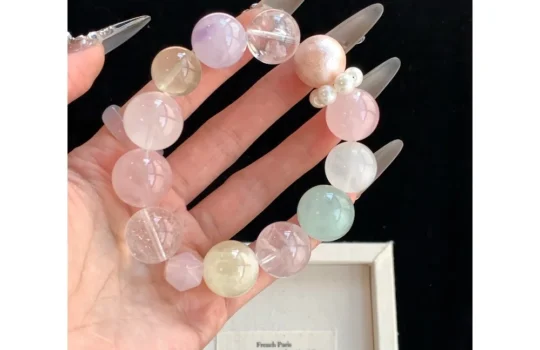
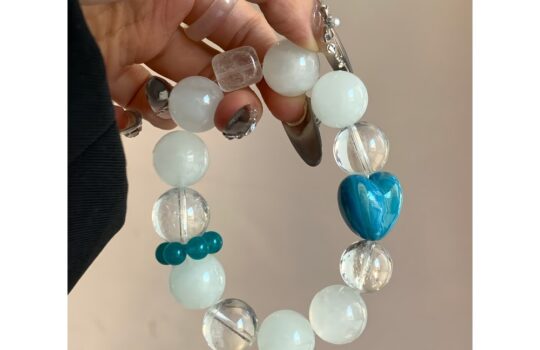
Crystal bracelets derive their uniqueness from internal inclusions—tiny minerals, gases, or liquids trapped during formation. These inclusions are not flaws but natural signatures of the stone’s growth process. Authentic crystals often feature asymmetrical, irregular patterns, such as wispy clouds, needle-like rutile, or speckled hematite. For example, amethyst may contain red hematite needles, while rose quartz displays star-like rutile clusters. These inclusions vary in size, shape, and distribution, creating a one-of-a-kind appearance. Synthetic or treated stones, however, may have artificial inclusions that look uniform, repetitive, or overly perfect, lacking the organic complexity of genuine crystals.
Common Types of Inclusions and Their Visual Characteristics
Mineral Inclusions: Identifying Natural Growth Patterns
Mineral inclusions form when other minerals crystallize alongside the host crystal. For instance, tourmaline crystals within quartz create striking needle-like inclusions that range from black to green. These inclusions often appear in clusters or linear arrangements, reflecting the stone’s growth direction. Another example is chlorite in green aventurine, which creates a mossy, speckled effect. To spot these, examine the bracelet under bright light—genuine mineral inclusions will have uneven edges and vary in density across the stone. Synthetic alternatives may use dyed materials or glass fragments to mimic this effect, but their patterns will lack depth and natural variation.
Liquid and Gas Inclusions: Signs of Volcanic or Hydrothermal Origins
Some crystals, like watermelon tourmaline or fluid-filled agate, trap liquids or gases during formation. Liquid inclusions may appear as clear or colored bubbles, while gas bubbles are smaller and more translucent. These inclusions often shift position when the stone is rotated, a phenomenon called “moving inclusions.” To test this, gently tilt the bracelet and observe if any inclusions move within the stone. Authentic liquid or gas inclusions will shift smoothly, while fakes may have static, painted-on effects. Additionally, natural inclusions may have tiny solid particles suspended within them, adding to their complexity.
Healing Crystal Myths vs. Geological Reality
Many believe inclusions enhance a crystal’s energy, but geologically, they are simply markers of the stone’s history. For example, rutile in quartz (rutilated quartz) is prized for its golden threads, but these are natural titanium dioxide crystals, not metaphysical conductors. Similarly, “phantom crystals”—stones with ghost-like layers of inclusions—form when growth pauses and resumes, leaving behind mineral deposits. These layers are often translucent and layered, creating a 3D effect. Authentic phantoms will have irregular, faded layers, while synthetic versions may have sharp, brightly colored lines that lack natural gradation.
Practical Tips for Observing Inclusions Without Specialized Tools
Using Light and Magnification to Enhance Visibility
Natural light is your best tool for inspecting inclusions. Hold the bracelet near a window or use a flashlight to illuminate the stones from different angles. Rotate the bracelet slowly to catch light reflections off inclusions, which can reveal their shape and depth. For smaller details, a magnifying glass or smartphone camera with macro mode can help. Focus on areas where inclusions are concentrated, such as near the edges or in translucent zones. Genuine inclusions will appear three-dimensional, with shadows and highlights, while fakes may look flat or painted onto the surface.
Comparing Multiple Stones for Consistency and Variation
A genuine crystal bracelet will feature beads with unique inclusion patterns, even if they come from the same mine. Compare several beads side by side—look for differences in inclusion size, shape, and distribution. For example, one bead may have a large chlorite patch, while another has fine rutile needles. This variation is normal in natural stones. If all beads look identical or have the same inclusion pattern, the bracelet is likely synthetic. Additionally, check for signs of artificial treatment, such as dyed inclusions that bleed color or glass-filled cracks that reflect light differently than natural inclusions.
Avoiding Common Pitfalls in Inclusion Identification
One mistake is assuming all clear crystals are flawless. Even high-quality quartz or amethyst may have tiny inclusions visible under magnification. Conversely, not all inclusions are natural—some stones are treated with dyes or heat to create fake patterns. For example, “mystic quartz” is often coated with a metallic film to produce rainbow colors, which will scratch off over time. To avoid this, test the stone’s surface with a cotton swab dipped in acetone—if the color transfers, it’s artificial. When in doubt, prioritize stones with subtle, irregular inclusions over those with bold, perfect patterns.