
How to Choose an Undyed Natural Crystal Bracelet: A Detailed Guide
When selecting a natural crystal bracelet, avoiding dyed or artificially altered stones requires attention to detail and an understanding of genuine mineral properties. Below are practical methods to ensure authenticity and quality.
Visual Inspection Under Natural Light
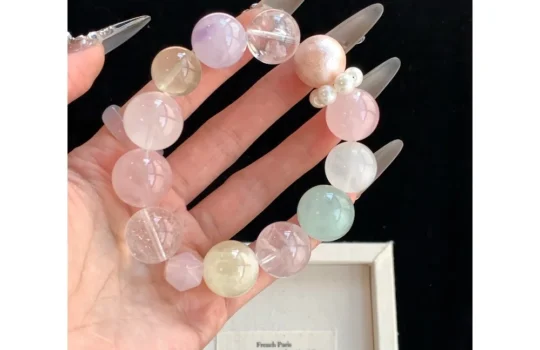
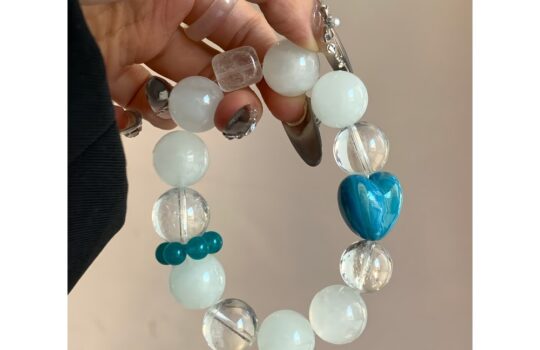
Begin by examining the bracelet under natural sunlight or a bright, neutral-colored light source. Authentic crystals exhibit subtle color variations and internal textures that mimic natural patterns, such as wispy inclusions or faint cloudiness. Dyed stones often display uniform, overly vibrant hues with no visible texture, resembling plastic or glass. For example, a genuine amethyst bracelet may show deeper purple streaks near the edges, while a dyed version appears uniformly saturated. Use a magnifying glass to inspect for tiny dye particles settled in crevices, a common sign of artificial enhancement.
Texture and Surface Analysis
Run your fingers along the bracelet’s surface to detect texture irregularities. Natural crystals have a smooth yet slightly uneven feel due to mineral growth patterns, while dyed or synthetic materials may feel uniformly polished or overly glossy. Pay close attention to drilled holes or beads with visible edges—genuine stones retain sharp, clean holes, whereas dyed glass often shows jagged or rough edges from low-quality drilling. Additionally, gently scratch the surface with a quartz stone (hardness 7) or a steel nail. Authentic crystals resist scratches, while softer materials like glass or resin will show marks.
Thermal Conductivity Test
Natural crystals have high thermal conductivity, meaning they feel cool to the touch and retain this temperature for longer periods. Hold the bracelet against your cheek or wrist for 10–15 seconds. If it quickly warms to body temperature, it may be synthetic or dyed glass. Genuine stones, such as quartz or agate, maintain their chill even after prolonged contact. This test is particularly useful for opaque or translucent varieties, where visual cues are less obvious.
Internal Inclusions and Light Refraction
Shine a flashlight or direct sunlight through the bracelet to observe internal structures. Authentic crystals contain natural inclusions like mineral deposits, water bubbles, or fine cracks, which scatter light unevenly. This creates a mesmerizing “inner glow” with shifting patterns. Dyed stones, however, lack these features and may appear hollow or uniformly translucent. For double-refractive stones like calcite or zircon, place a single hair under a bead—genuine crystals will split the hair into two distinct lines, while synthetic materials won’t produce this effect.
Avoiding Common Pitfalls
Be cautious of bracelets marketed as “flawless” or “perfectly clear,” as natural crystals rarely lack inclusions entirely. While high-quality stones may have minimal flaws, the complete absence of texture often indicates artificial treatment. Similarly, avoid overly bright or neon-colored pieces, as these are rarely found in nature. When in doubt, request a certification from a reputable gemological lab or consult a trusted expert who can analyze the stone’s composition using advanced tools like spectroscopy or X-ray diffraction.
By combining these observational and tactile techniques, you can confidently identify undyed natural crystal bracelets. Prioritize sellers who provide transparent information about their sourcing and processing methods, and always trust your instincts—if a deal seems too good to be true, it likely is.