Identifying Authentic Crystal Bracelets: Key Visual and Physical Indicators
Natural crystal bracelets are prized for their unique beauty and energetic properties, but distinguishing genuine stones from synthetic alternatives requires careful observation. Below are practical methods to assess authenticity through visual, textural, and physical tests.
Color and Texture Analysis
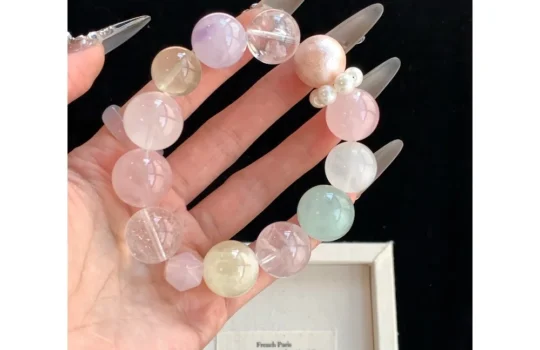
Natural Color Variations: Authentic crystals often exhibit uneven color distribution, with subtle shifts in hue or tone. For example, a natural amethyst bracelet may display deeper purple streaks alongside lighter areas, while synthetic versions tend to have uniformly saturated colors.
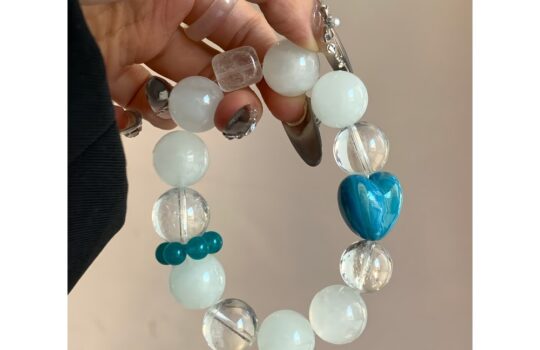
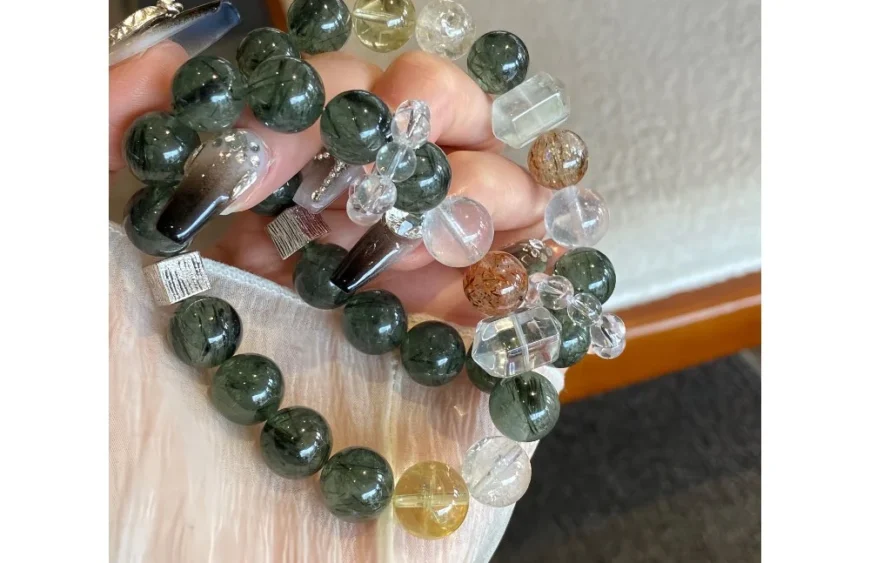
Inclusions and Imperfections: Genuine crystals frequently contain internal inclusions, such as tiny cracks, cloud-like patterns, or mineral deposits. These “flaws” are natural markers of formation over millennia. Smooth, flawless bracelets with no visible texture are likely made of glass or resin.
Ice Cracks and Fiber-Like Structures: Some crystals, like quartz, may show wispy, thread-like inclusions or faint horizontal lines. These textures are absent in artificial materials, which often appear overly clear or artificially perfect.
Physical and Optical Tests
Temperature Response: Natural crystals feel cool to the touch and retain their temperature longer than synthetic materials. Place the bracelet against your cheek or wrist—if it warms quickly, it may be plastic or glass. Genuine crystals will stay cool for extended periods.
Light Refraction: Hold the bracelet under direct light and rotate it slowly. Authentic crystals often display a soft, rainbow-like glow (dispersion) due to their internal structure. Synthetic stones may lack this effect or produce overly bright, artificial reflections.
Double Refraction Test: Place a single strand of hair on a flat surface and position the crystal above it. Look through the crystal—if the hair appears doubled (due to light splitting into two paths), the stone is likely genuine. This phenomenon occurs because natural crystals have birefringence properties.
Advanced Verification Methods
Hardness Test: Genuine crystals rank higher on the Mohs scale (e.g., quartz at 7). Lightly scratch an inconspicuous area with a steel knife or nail. If it leaves no mark, the stone is harder than glass (5.5 Mohs) and likely authentic. However, proceed cautiously to avoid damaging delicate pieces.
UV Light Reaction: Some natural crystals, like fluorite or calcite, fluoresce under ultraviolet light. Shine a UV lamp on the bracelet in a dark room. A dull or nonexistent glow suggests synthetic material, while a vibrant reaction may indicate authenticity.
Thermal Shock Resistance: Heat a needle until red-hot, then gently press it against an inconspicuous part of the bracelet. Natural crystals resist cracking, while glass may shatter. Note: This test is risky and should only be performed by professionals.
Final Considerations:
For high-value purchases, request a certification from a reputable gemological laboratory. Additionally, buy from trusted sellers who provide transparency about sourcing and processing. By combining these visual, physical, and optical checks, you can confidently identify authentic crystal bracelets and avoid imitations.