
The Visual Impact of Pattern Direction in Crystal Bracelets: How Orientation Shapes Perception
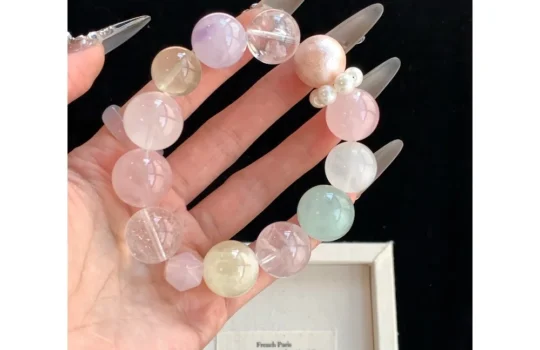
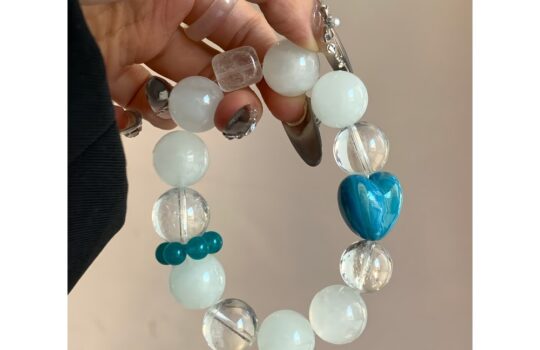
The direction in which patterns are carved, etched, or naturally formed on a crystal bracelet significantly influences its overall aesthetic, creating dynamic visual effects that range from subtle elegance to bold movement. Whether the design features geometric lines, organic swirls, or layered textures, the orientation of these elements interacts with light, wrist contours, and surrounding jewelry to define the piece’s character. Understanding these interactions helps wearers select patterns that complement their style and enhance the bracelet’s presence.
Horizontal Patterns: Creating Width and Continuity
Horizontal patterns—those that run parallel to the wrist’s circumference—tend to elongate the visual appearance of the bracelet, making it feel wider and more substantial. This orientation works particularly well with round or oval-shaped crystals, as it emphasizes their natural symmetry while adding a sense of calm stability. For example, a bracelet with horizontal bands of polished crystal layers can create a sleek, modern look that pairs effortlessly with minimalist outfits.
Enhancing Light Reflection Across Surfaces
Horizontal patterns also influence how light travels across the crystal’s surface. When the wrist moves, these designs catch and diffuse light in a consistent, linear fashion, producing a soft, shimmering effect that feels controlled and deliberate. This makes horizontal patterns ideal for formal settings or professional environments, where understated sophistication is key. In translucent crystals like moonstone or opal, horizontal etching can amplify internal inclusions, creating a mesmerizing, cloud-like glow that shifts with the angle of view.
Vertical Patterns: Adding Height and Dynamic Energy
Patterns oriented vertically—along the length of the wrist from palm to elbow—introduce a sense of height and upward movement, making the bracelet appear more slender and energetic. This direction is particularly effective for rectangular or marquise-cut crystals, as it accentuates their elongated shapes and creates a streamlined silhouette. A bracelet with vertical ridges or facets, for instance, can mimic the look of stacked bangles while maintaining a single, cohesive piece.
Interacting With Wrist Movement
Vertical patterns respond dynamically to the wrist’s natural flexing and gesturing. As the hand moves, these designs catch light in fragmented, ever-changing ways, producing a lively, kinetic effect that draws attention without overwhelming the wearer. This makes vertical patterns well-suited for casual or creative settings, where a touch of playful sophistication is desired. In darker crystals like black onyx or smoky quartz, vertical grooves can create dramatic contrasts, highlighting the stone’s depth while adding a modern, architectural edge.
Diagonal and Asymmetrical Patterns: Breaking Symmetry for Visual Interest
Diagonal patterns—those cut at an angle between horizontal and vertical—introduce a sense of motion and unpredictability, making the bracelet feel more organic and fluid. This orientation works beautifully with freeform crystals or irregular shapes, as it softens harsh edges and creates a balanced, yet asymmetrical, aesthetic. A bracelet with diagonal striations or chevron-inspired designs, for example, can add a bohemian touch to both casual and dressed-up looks.
Asymmetry and the Illusion of Customization
Asymmetrical patterns, where elements are intentionally uneven or offset, amplify the bracelet’s uniqueness by resisting traditional symmetry. These designs often feel more handcrafted and artisanal, appealing to those who value individuality over uniformity. When paired with rough-hewn crystals or raw gemstones, asymmetrical patterns can evoke a natural, earthy vibe, as if the piece were shaped by geological forces rather than human hands. This makes them ideal for layering with other jewelry, as their irregularity complements rather than competes with surrounding pieces.
Pattern Direction and Layering: Harmonizing Multiple Bracelets
The orientation of patterns becomes even more critical when layering multiple crystal bracelets, as mismatched directions can create visual chaos or, conversely, a curated, intentional look. Combining horizontal and vertical patterns, for instance, can add depth and dimension to a stack, with each piece contributing to a cohesive yet textured whole. Diagonal or asymmetrical designs, when paired with simpler, more uniform bands, can serve as focal points that anchor the arrangement.
Balancing Bold and Subtle Elements
To avoid overwhelming the wrist, consider alternating pattern directions based on the prominence of each bracelet. A statement piece with bold vertical lines might pair best with understated horizontal or smooth bands, allowing it to shine without clashing. Similarly, mixing patterns of varying scales—such as a fine, horizontal etched design with a chunky, diagonal-cut crystal—can create visual hierarchy, guiding the eye naturally across the stack.
By evaluating pattern direction in relation to crystal shape, light interaction, and layering strategies, wearers can select bracelets that feel both intentional and effortlessly stylish. Whether aiming for calm continuity, dynamic energy, or artistic asymmetry, the right pattern orientation transforms a simple accessory into a visually compelling expression of personal taste.