Wearing Crystal Bracelets on Your Non-Dominant Hand: A Guide to Energy Balance and Practical Benefits
Crystal bracelets are celebrated for their aesthetic appeal and metaphysical properties, but the hand on which they’re worn significantly impacts their effects. While many instinctively place them on their dominant hand, wearing them on the non-dominant side offers unique advantages rooted in energy work and practicality. Below, explore why this approach matters and how to optimize it.
The Energy Dynamics of Non-Dominant Hand Wear
In holistic practices, the non-dominant hand is often called the “receptive hand,” responsible for absorbing energy, while the dominant hand is the “projective hand,” used to channel energy outward. This distinction shapes how crystals interact with your aura.
Absorbing Beneficial Energies
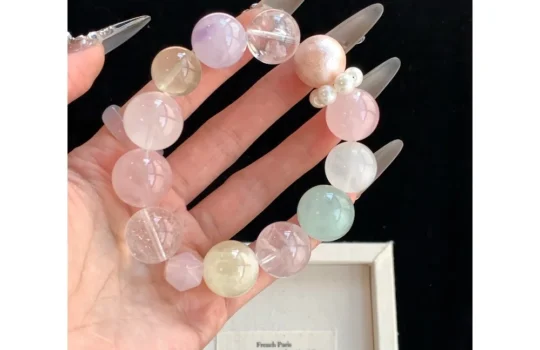
Crystals like rose quartz (love) or amethyst (calm) are believed to emit subtle vibrations that align with emotional healing. Wearing them on the non-dominant hand allows these energies to flow directly into your system, enhancing self-nurturing and inner peace. For example, someone seeking to reduce anxiety might wear blue lace agate on their left hand (if right-handed) to absorb its soothing frequencies during daily activities.
Grounding and Protection
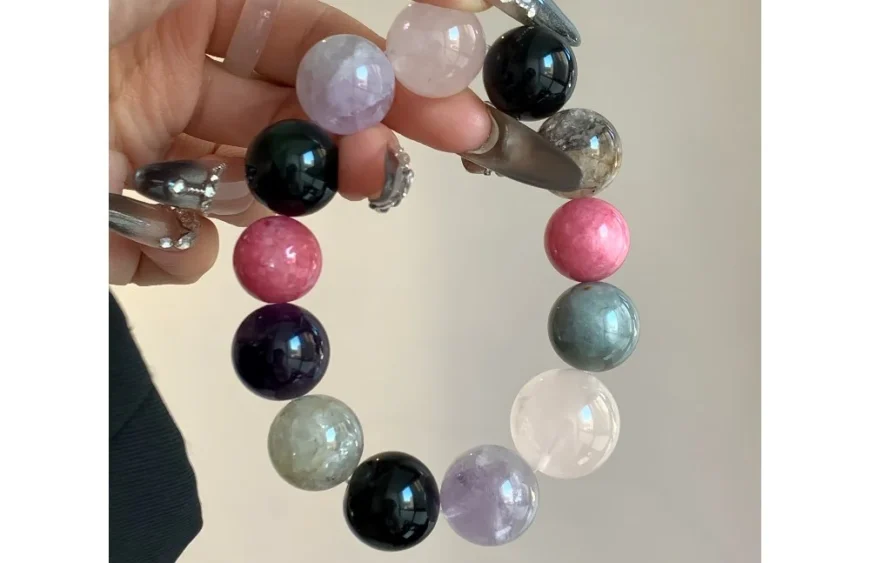
Stones such as black tourmaline or hematite are traditionally used for grounding and shielding against negativity. Placing them on the non-dominant hand creates a passive barrier, absorbing external stressors without disrupting the dominant hand’s active energy output. This is particularly useful in high-stress environments, like offices or crowded spaces, where you need protection without conscious effort.
Practical Advantages for Daily Life
Beyond metaphysical benefits, wearing crystal bracelets on your non-dominant hand addresses practical concerns that often go overlooked.
Reducing Wear and Tear
The dominant hand is used more frequently for tasks like writing, cooking, or lifting objects, increasing the risk of scratches, dents, or accidental damage to delicate crystals. By switching to the non-dominant hand, you minimize exposure to rough surfaces and chemicals, preserving the stone’s polish and structural integrity. For instance, a bracelet with soft minerals like selenite or fluorite will last longer when worn on the less active hand.
Enhancing Comfort During Physical Activities
If you engage in sports, yoga, or manual labor, the dominant hand’s movements can make wearing a bracelet cumbersome. The non-dominant hand remains relatively stationary during most activities, reducing the likelihood of the bracelet slipping off or causing irritation. This is especially important for adjustable or elastic bands, which may stretch unevenly with frequent use.
Adapting to Specific Intentions and Scenarios
The non-dominant hand’s role in energy absorption makes it ideal for certain intentions, while the dominant hand suits others. Understanding this duality allows you to tailor your approach.
Intentional Layering for Complex Goals
For multifaceted objectives like boosting creativity while staying grounded, wear two bracelets: one on each hand. Place a carnelian (creativity) on the non-dominant hand to absorb inspiration and a smoky quartz (grounding) on the dominant hand to stabilize its expression. This balance prevents overwhelming energy shifts and promotes harmony.
Switching Hands for Situational Needs
If you’re attending a social event where you need to project confidence, wear citrine (success) on your dominant hand to amplify assertiveness. Later, switch to a non-dominant hand placement for a calming stone like lepidolite to unwind. This flexibility ensures your crystals align with your evolving emotional state throughout the day.
Addressing Common Concerns and Misconceptions
Some worry that non-dominant hand wear diminishes a crystal’s effectiveness, but this depends on the stone’s purpose and your energy sensitivity.
Do All Crystals Work Better on the Non-Dominant Hand?
Not necessarily. Protective stones like black obsidian are often worn on the dominant hand to actively repel negativity. However, for passive benefits like emotional healing or intuition-building, the non-dominant hand is ideal. Experiment with both placements to determine what feels most aligned with your goals.
What If I’m Left-Handed?
The principles remain the same regardless of dominance. Left-handed individuals should wear receptive stones (e.g., moonstone for intuition) on their right hand and projective stones (e.g., pyrite for abundance) on their left. Trust your intuition—if a placement feels uncomfortable, adjust accordingly.
Maintaining Crystal Efficacy Between Wears
Proper care ensures your bracelet retains its energy and appearance, whether worn on the dominant or non-dominant hand.
Cleansing Rituals
Crystals absorb ambient energies, so cleanse them regularly. Place them under moonlight overnight or use a selenite charging plate for 24 hours. Avoid water for porous stones like selenite or minerals with metal inclusions, as moisture can cause damage.
Safe Storage
Store your bracelet in a cloth pouch away from direct sunlight and EMFs (e.g., phones or laptops). If you switch hands frequently, designate separate pouches for each hand to prevent energy mixing between stones.
By embracing non-dominant hand wear, you unlock a deeper connection to your crystals’ energies while safeguarding their physical condition. Whether you’re drawn to metaphysical practices or simply seek a practical accessory, this approach offers a balanced, intentional way to integrate crystals into your daily life.